
How to Choose a Contract Manufacturer for Your Product
A manufacturer has to fit more than your order volume. The ones that work long-term fit your product category, your formula situation, your packaging, your quality requirements, and the way you plan to grow.
Start with fit, not capacity
Most brands begin the search with one question: can this facility make my volume? It matters, but it is rarely what decides whether the relationship works. A manufacturer can have plenty of tank capacity and still be the wrong fit because they have never run your product type, cannot run your packaging format, or treat a formula review as a formality.
A better first question is whether the manufacturer has real experience with your category. Skincare, OTC drug products, homeopathics, oral care, gummies, honey-based supplements, household products, and pet care each carry different formulation, filling, documentation, and compliance considerations. A facility that runs several of these well has already solved problems you will otherwise discover during your first production run.
What to evaluate beyond the quote
Price and minimum order quantity are the easiest things to compare, which is why brands over-weight them. These are the areas that actually separate manufacturers once production starts:
- Product experience. Ask what they have made in your category and in your format. A cream, a tincture, a gummy, and a surface cleaner are different production problems.
- Formula and scale-up review. Can they review an existing formula, identify what changes at volume, and develop or refine a formula if you need it? Or do they only fill what you bring?
- Packaging capability. Which containers, closures, tubes, sachets, and packets can they actually fill and seal on their equipment, and can they help you source components?
- Quality systems. Registrations and certifications matter, but so does how quality is run day to day: who leads it, what is tested, and what records you receive.
- Documentation. Batch records, ingredient documentation, procedures, and testing coordination should be part of the offer, not an add-on you discover you need.
- Communication. Who is your point of contact from purchase order to shipment? A single coordinator who owns the schedule is worth more than a fast first reply.
- Long-term production fit. Are they built for repeat runs and SKU expansion, or optimized for one-off projects?
Questions worth asking on the first call
You do not need everything finalized before a conversation, but the answers to these tell you quickly whether to keep talking.
- Which product categories and formats do you run most often?
- What is your minimum run, and does it change by format?
- Do you review formulas before quoting, and what do you look for?
- Which packaging formats can you fill and seal in-house?
- What certifications and registrations does the facility hold, and how recent is the last audit?
- What documentation comes with a finished batch?
- Who coordinates my order day to day, and how are timeline changes communicated?
- How do you handle repeat orders and reorder timing?
- Who owns the formula and the documentation at the end of the engagement?
That last question is easy to skip and expensive to skip. Get a clear answer before you share anything proprietary.
Warning signs and good signs
Be cautious if a manufacturer quotes without asking about your formula status, packaging, or timeline; if they cannot name the certifications they hold; if quality is described as a final inspection rather than a process; or if nobody can tell you who will own your order once it is placed.
Take it as a good sign if they ask harder questions than you expected, if they tell you when something needs more review rather than promising it will be fine, and if they can describe exactly how a product moves from SKU review through formula and sample review, production planning, production, and delivery.
If you are switching manufacturers
Brands that move production usually do it under pressure: a stockout, a quality problem, a partner that cannot keep up with demand. The instinct is to move fast. Move deliberately instead. Bring your current formula, your packaging components, your production history, and your honest timeline. A capable manufacturer will review all of it before committing, and that review is what protects you from repeating the problem somewhere new.
Chaé runs transitions as a five-step process with one point of contact — what it involves, what to bring, and what to expect is laid out on the switching manufacturers page.
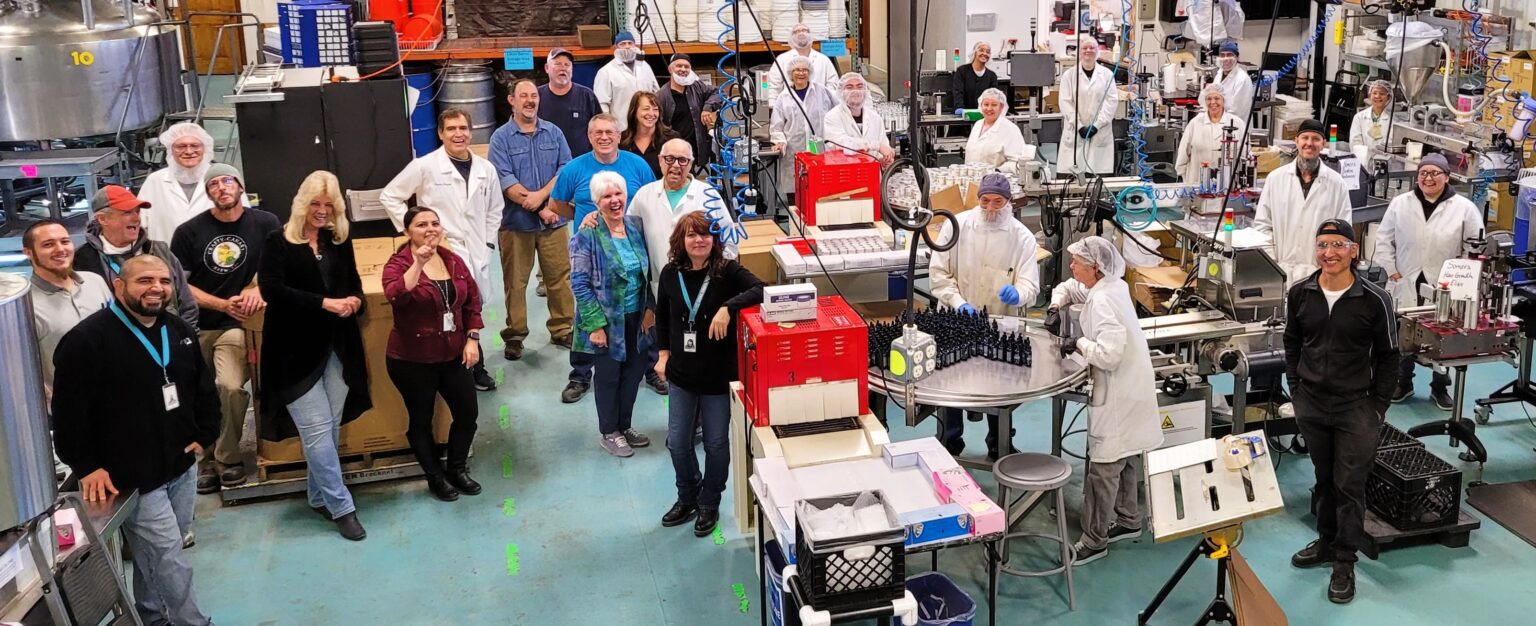
Chaé Manufacturing is built for established and scaling brands running 5,000 to 1,000,000+ unit programs across skincare, personal care, OTC, homeopathic, supplement, household, pet, and equestrian products. Every project starts with a SKU review of product, volume, timeline, formula status, and production requirements before anything is quoted or scheduled.
The facility in Walsenburg, Colorado is cGMP compliant, FDA registered, registered to produce applicable OTC products, ToxicFree® certified, and Leaping Bunny certified, with a PCQI-led Quality Department and an independently validated HACCP plan. If the project is not a fit, Chaé says so early.
Before you reach out
- Your product category and format
- Whether you have an approved formula, a formula that needs review, or need development
- Your packaging direction, and any components already sourced
- Starting run size and expected reorder volume
- Your current manufacturer situation and timeline
- The questions you want answered before sharing anything proprietary
Have a product ready for review?
Chaé Manufacturing reviews product category, formula status, target volume, packaging, and timeline to determine whether a project is a fit for 5,000 to 1,000,000+ unit production.
Start a Production Review