
Switching Manufacturers Without Losing a Season
Most brands that call Chaé already have a manufacturer. They call because the third run doesn’t match the first, the minimum moved, the run date slipped again, or nobody answers the phone. This page is what a transition actually involves, what Chaé needs from you, and what you should expect from a manufacturer that you may not be getting now.
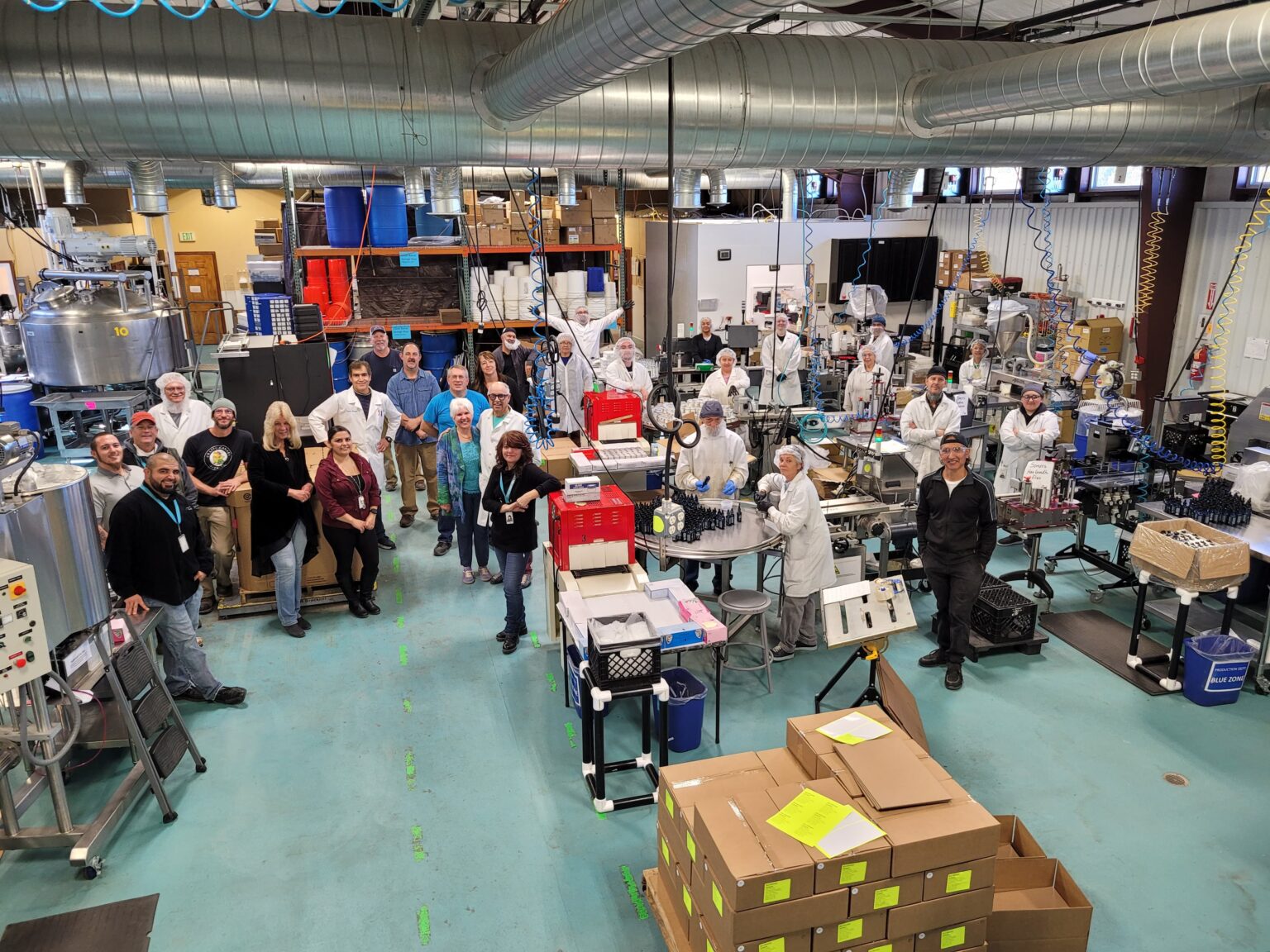
It is rarely about price
Brands rarely leave a manufacturer over a quote. They leave over one of these four, and usually more than one at once.
Consistency
The third run doesn’t match the first. Viscosity drifts, color shifts, a fragrance reads different — and there’s no batch record to show why.
Capacity
You’re selling faster than they can fill. The run date slips, the reorder lands late, and you’re explaining a stockout to a retailer.
Communication
Nobody answers. When they do, it’s to tell you the minimum went up or the component didn’t arrive — after the run was supposed to start.
Documentation
A retail buyer asks for the cGMP audit or a batch record, and the answer is a shrug. Your claim is only as good as the paper behind it.
Five steps, one point of contact
Brian Conner, Sr. Director of Client Relations, runs every transition from the first call to the first reorder. Nothing here starts with a purchase order; it starts with a review of what you already have.
Keep your current manufacturer running until step three is approved. A bridge order costs less than a stockout.
- Review what you have. The formula or the finished product, the packaging and who owns the tooling, batch records if you have them, current run size, and where inventory stands. Brian coordinates; you send what exists.
- Formula and process review. Ricardo Bobian and Linda Chaé check whether the formula holds at Chaé’s batch sizes and flag any ingredient that won’t pass the ToxicFree® review — before anything is scheduled, not after.
- Match batch. A pilot batch you compare against your current product, side by side. The full run is scheduled only when you approve the match.
- Component transfer. Rita Young sources what transfers and re-sources what doesn’t. Closures, labels, and cartons are the usual holdups; they get resolved before the run date, not on it.
- First run, on the record. The batch record starts with run one. The reorder point and lead time are set before the first pallet ships, so the second run is a calendar entry, not a scramble.
What a manufacturer should be giving you
Use this as a checklist against your current arrangement. Each line is something Chaé commits to on every account, not on request.
- A named point of contact. Brian Conner, with a direct line. Not a ticket queue.
- A batch record on every run. Materials, lot numbers, quantities, process steps, sign-offs. Yours on request.
- A formula review before the first run. Problems named up front by a chemist, not discovered on the line.
- Room to grow without moving again. Runs from 5,000 units, scaling past 1,000,000 on the same floor and the same record.
- A quality department you can point a buyer at. PCQI-led, with an independently validated HACCP plan.
- Certifications you can hand to a retailer. cGMP, FDA registration, ToxicFree®, Leaping Bunny, OTC registration, Halal and Kosher.
- Water purified to 3 ppm. Rocky Mountain water through RO/DI, the same in every batch.
- Bad news early. If a component is late or a formula needs work, you hear it when Chaé does.
Bring what you have. Chaé fills the gaps.
- The formula — or the finished product, if the formula belongs to your current manufacturer
- Packaging components, specs, and who owns the tooling and artwork
- Current run size, reorder cadence, and how much inventory is on hand
- Any test data: stability, micro, compatibility
- Your timeline — especially the date you run out
If the formula belongs to your manufacturer
It happens more than brands expect: the product is yours, the formula isn’t. Chaé can develop a match from the finished product and the INCI list — Linda Chaé has spent 35 years doing exactly that — but it adds development and stability time to the transition. Say so on the first call and the plan is built around it.
How to prepare a formula for reviewRequest a Manufacturing Review
Submit your product details, current volume, target run size, and timeline. We’ll review whether Chaé Manufacturing is the right fit for your production needs.
Walsenburg, Colorado 81089
Share Your Product Details
For established products, qualified new-product development, manufacturer transitions, and 5,000 to 1,000,000+ unit production targets.