
How to Scale Product Manufacturing Without Sacrificing Quality
Growth is the good problem, until production cannot keep up with it. Scaling well is mostly about seeing what changes as volume grows and planning for it before the stockout, not after.
What actually changes as volume grows
The product does not change. Almost everything around it does.
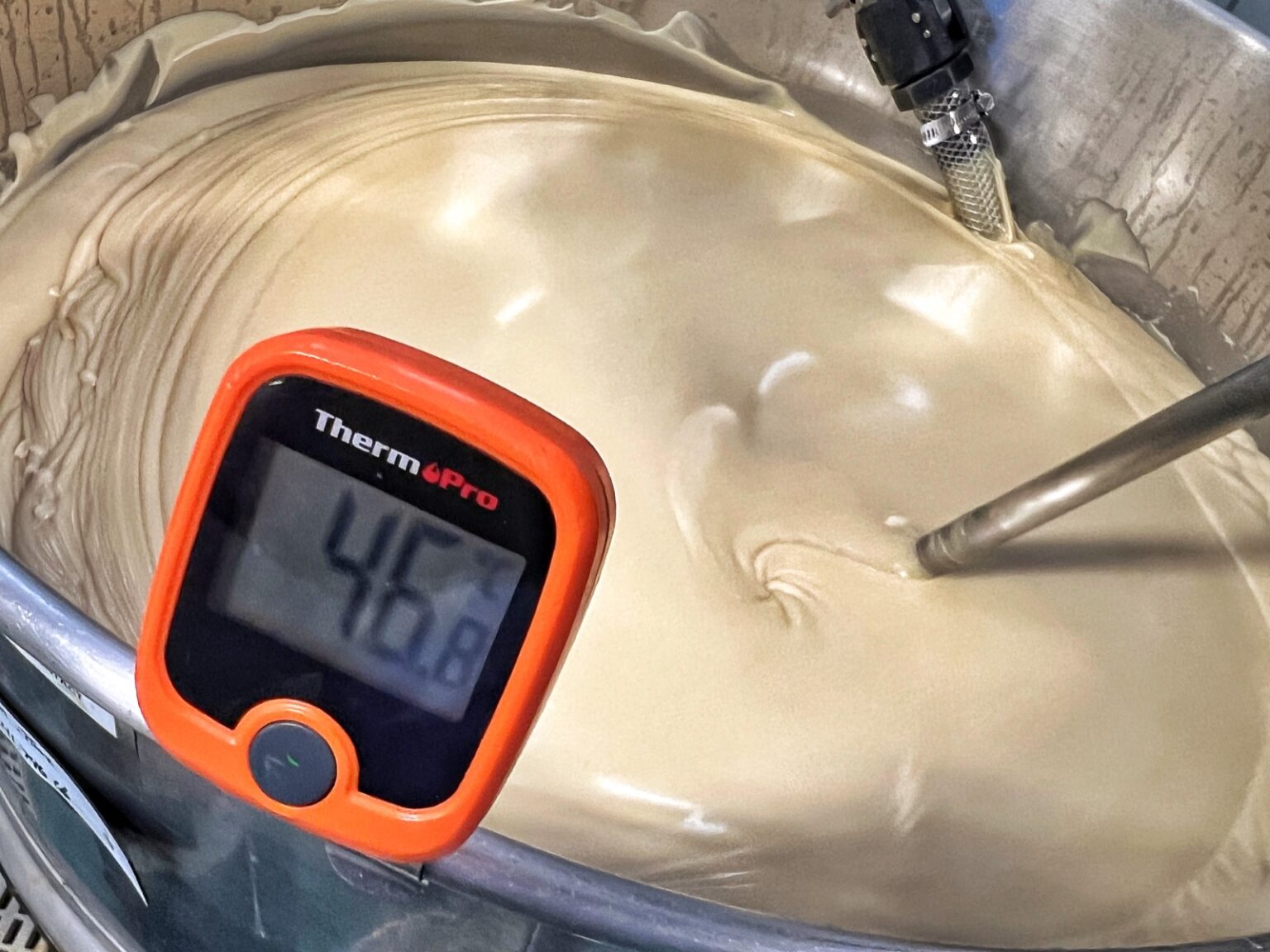
- Batch size and equipment. A formula that runs in a small vessel may need a different mixing profile, heating and cooling curve, or order of addition in a larger tank. This is scale-up, and it is a formulation problem as much as a production one.
- Sourcing. Raw material and component purchasing shifts from buying what one run needs to managing supplier relationships, lead times, lot consistency, and alternates. A single-source specialty ingredient that was fine at 5,000 units is a risk at 100,000.
- Scheduling. Larger runs need longer production windows and more lead time. Reorder timing becomes a planning discipline rather than a phone call.
- Documentation. More batches mean more records, more lots to trace, and more value in a process that is written down and repeatable rather than carried in one person’s head.
- Quality consistency. The challenge shifts from “does this batch pass” to “does every batch match the last one.” Process controls and in-process checks matter more, not less.
- Warehousing and logistics. Finished goods need somewhere to sit and a plan for moving them. Staging, palletizing, and shipping coordination become part of the manufacturing relationship.
Signs you have outgrown your current setup
You are ordering more often and waiting longer. Your manufacturer is missing dates or asking for larger minimums than they used to. Batch-to-batch variation is showing up in customer feedback. You are carrying safety stock to cover unreliability rather than demand. Or you have simply been told, directly or by silence, that the next tier of volume is not something they can do. Any of these is a reason to review the production plan before the next order, not during it.
Building a scale-up plan
- Define the target. Where should this product be in twelve to eighteen months — units per month, number of SKUs, channels? The plan for a product going to 25,000 units and one going to 250,000 are different from the first decision.
- Review the formula for scale. Confirm it runs at the larger batch size with the same performance, and lock the process once it does.
- Secure the supply chain. Identify single-source ingredients and components, qualify alternates where possible, and understand lead times at the new volume.
- Confirm packaging at volume. Component minimums and lead times change at higher quantities. Confirm the current components are still the right ones.
- Set reorder timing. Work back from lead times and sales velocity to a reorder trigger, so production starts before stock runs low.
- Plan the transition. If you are moving manufacturers, decide how much inventory bridges the gap and how the first run at the new facility is validated.
Transitioning without losing momentum
A manufacturer transition under stockout pressure is where most scale-up problems happen. The new facility needs the formula, procedure, specifications, packaging, and production history to review before it can commit, and that review takes time you may not feel you have. Start the conversation before the stockout. Bring everything. Expect a pilot or first run to be evaluated carefully, and hold enough inventory to cover it. A slower, validated transition is faster than a rushed one that has to be redone.
Scaling the line, not just the product
Growth often means more SKUs, not only more units. Line extensions — new formats, sizes, scents, related products — are easier when they are planned with the manufacturer who already runs the base product. Shared components, shared raw materials, and a shared process reduce the setup cost of each addition. Tell your manufacturer where the product family is headed, not just the one SKU in front of you.
Chaé Manufacturing is positioned for brands that are already selling and managing growing demand, switching manufacturers, adding production capacity or backup production, or preparing for larger repeat runs, from 5,000-unit runs to 1,000,000+ unit programs. Scale-up planning covers production capacity, manufacturer transition needs, repeat production, and long-term growth requirements, and line-extension planning covers related formats and product families.
Operations coordinate hundreds of products from batch production in the tank farm through filling and packaging; client relations owns each project from purchase order through production travelers, work orders, warehouse staging, and shipping; and procurement manages supplier relationships and alternate sourcing. Chaé is also expanding into a larger multi-building manufacturing campus for increased production, warehousing, and long-term client growth.
Before you reach out
- Current monthly volume and where you expect it in 12–18 months
- Your reorder cadence and current lead times
- Single-source ingredients or components you depend on
- Whether you are adding capacity, adding backup production, or moving entirely
- How much inventory you hold to bridge a transition
- Planned line extensions and related SKUs
Have a product ready for review?
Chaé Manufacturing reviews product category, formula status, target volume, packaging, and timeline to determine whether a project is a fit for 5,000 to 1,000,000+ unit production.
Start a Production Review