
Packaging Requirements to Finalize Before Manufacturing
Packaging is where production schedules go to die. A finished formula and a confirmed run date are worth nothing if the closures are six weeks out or the label does not fit the tube. Resolve components before they become the bottleneck.
Why packaging decides the timeline
Formula work and production planning can happen in parallel. Packaging cannot be filled until it exists. Component lead times, minimums, artwork approval, and compatibility testing all sit on the critical path, and each one is usually longer than brands expect. When a launch slips, packaging is the most common reason.
The other problem is that packaging decisions interact with everything else. The container determines the fill method. The fill method determines which equipment runs the product. The closure and the formula determine whether the product is stable on the shelf. A change to any one of them can reopen the others.
The components to finalize
- Primary container. Bottle, jar, tube, pump, sprayer, packet, sachet, or vial — and the specific size, material, and neck finish. “A 2 oz bottle” is not a specification.
- Closure. Cap, pump, sprayer, disc top, or flip top, matched to the container’s neck finish and to the product’s viscosity.
- Seals. Induction seals, shrink bands, tamper-evident features. These affect both the equipment used and the finished-goods presentation.
- Fill volume. The declared net contents, the actual target fill, and the headspace the container allows.
- Labels and printing. Label size and material, adhesive, application method, and whether the container is direct-printed. Artwork must fit the container and carry the required regulatory content for your category.
- Secondary packaging. Cartons, inserts, and case packs, and how finished goods will be palletized and shipped.
Compatibility: the part brands skip
Packaging compatibility is whether the formula and the container leave each other alone over time. Fragrance and essential oils can attack certain plastics. Low-pH or high-active formulas can interact with closures and liners. Pumps have viscosity ranges. Induction seals need the right liner material for the container. None of this is exotic, but all of it has to be checked, and it has to be checked with the actual components you plan to use, not similar ones. If you change a component after compatibility testing, the test may need to be repeated.
Sourcing: minimums, lead times, and who does it
Decide early whether you are sourcing components or whether your manufacturer is. If you are, share supplier details, minimums, and lead times so production can be scheduled around real delivery dates. If the manufacturer is sourcing, give them budget parameters and your presentation goals, and expect them to steer you toward components that run well on their equipment. Either way, confirm minimums before you commit to a run size. Component minimums, especially for printed or custom items, are one of the most common reasons a first run is larger than planned.
A sensible sequence
- Choose the container format and confirm it suits the product’s viscosity and use.
- Confirm the manufacturer can fill and seal that format in-house.
- Lock the specific container, closure, and seal components with their suppliers, minimums, and lead times.
- Run compatibility with the actual components.
- Finalize artwork to the real container dimensions and regulatory requirements.
- Order components against the production date, with buffer.
Working in that order prevents the expensive loop where artwork is approved for a container that fails compatibility, or components arrive that the filling line cannot run.
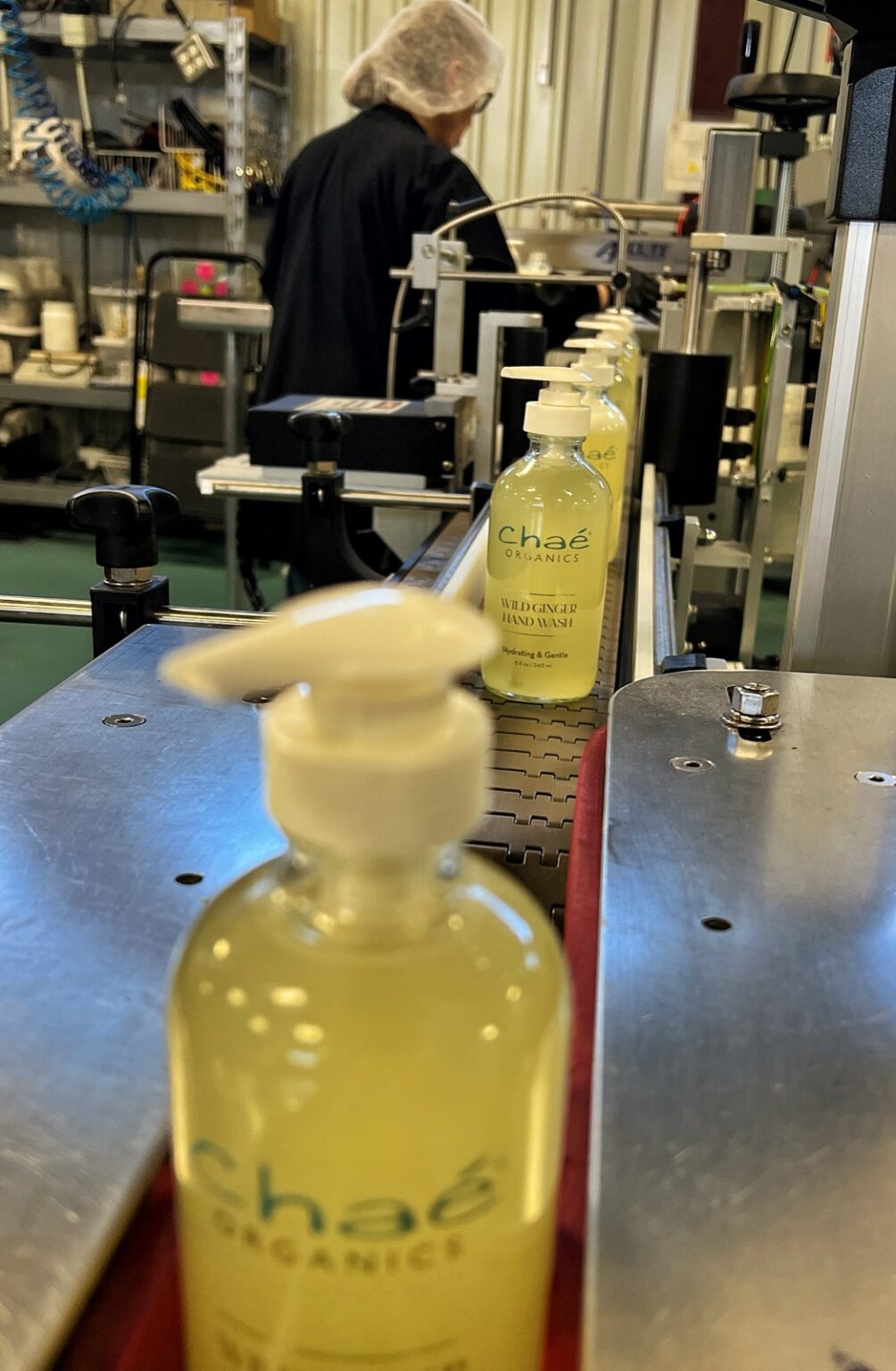
Chaé Manufacturing fills bottles, tubes, jars, sachets, packets, and more, with in-house induction sealing, packet sealing, tube filling, and shrink-wrapping equipment. Packaging sourcing covers container, closure, label, and packaging options against short- and long-term volume, budget, and timeline, along with batch and packaging fit review — filling format, packaging flow, sealing needs, labels, closures, and logistics — so the product moves through production without rework.
The production review asks whether packaging is finalized and already sourced, in progress, needs sourcing help, or is not yet decided. Answer that honestly; it changes how the project is planned.
Before you reach out
- Container format, size, material, and neck finish
- Closure, seal, and tamper-evidence requirements
- Target fill volume and declared net contents
- Label or print specifications and artwork status
- Whether components are sourced, in progress, or need sourcing
- Supplier minimums and lead times for anything already chosen
Have a product ready for review?
Chaé Manufacturing reviews product category, formula status, target volume, packaging, and timeline to determine whether a project is a fit for 5,000 to 1,000,000+ unit production.
Start a Production Review